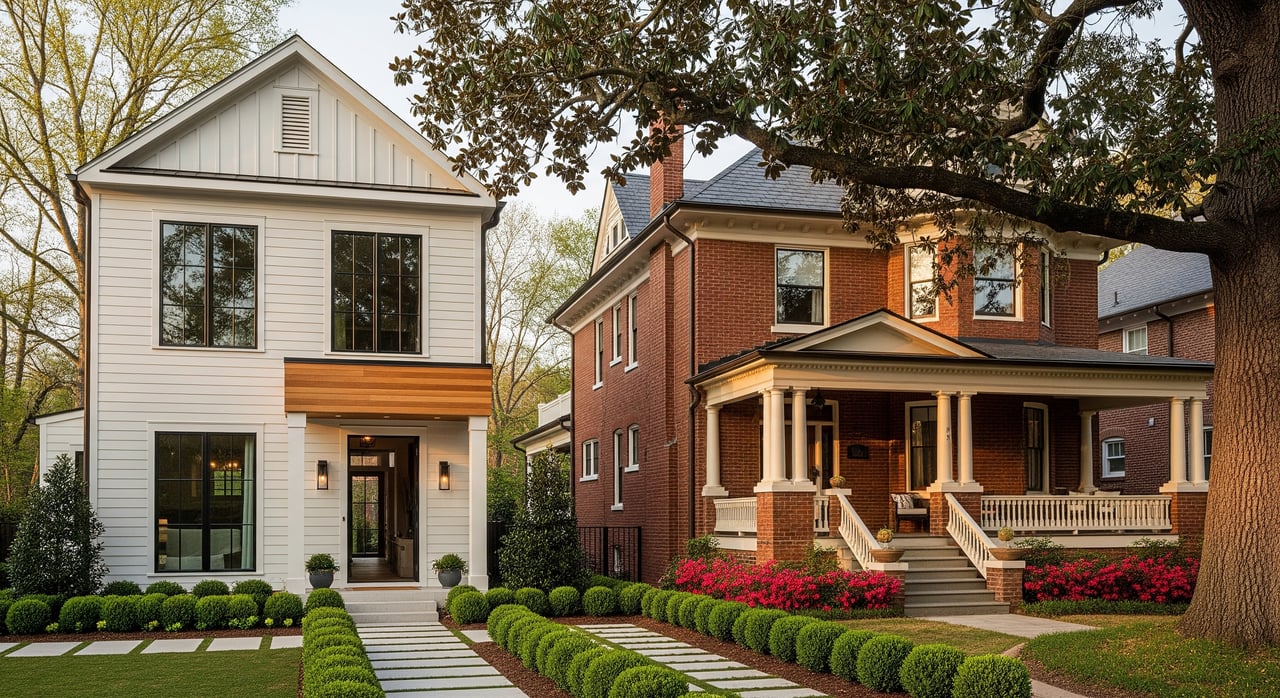
Trying to choose between a brand-new home and a classic resale in Marietta can feel like comparing apples and oranges. You want the right fit for your budget, timeline, and long-term plans in Cobb County. In this guide, you will learn how new construction and resale stack up on price, timing, warranties, inspections, HOA rules, and resale potential so you can move forward with confidence. Let’s dive in.
What new construction looks like in Marietta
New builds in and around Marietta often appear in northern and eastern Cobb County, plus infill projects closer to I-75 and downtown. You will also find larger master-planned neighborhoods at the city’s edges and in nearby unincorporated Cobb County. Some developments carry a Marietta mailing address even if they sit just outside city limits.
Move-up families tend to favor larger lots and modern floorplans in builder communities. First-time buyers often compare entry-level new builds with resale condos or townhomes that fit a starter budget. Your decision will likely weigh school zoning within the Cobb County School District, commute routes along I-75 and I-285, and the lifestyle trade-off between downtown Marietta’s walkable amenities and suburban community features.
Local approvals and permitting through the City of Marietta or Cobb County can affect delivery timelines for new neighborhoods. If your move hinges on a specific date, that timing detail matters.
Costs: sticker price vs. total cost
New construction pricing
A new home’s base price may look competitive on paper, but it often excludes upgrades and lot premiums. Structural options, design packages, and landscaping can add a noticeable percentage to the base. Desirable lots, like corners or cul-de-sacs, may carry premiums.
Builders sometimes offer incentives for closing costs or rate buydowns. Those can offset expenses, but you should review whether the overall price reflects the value of what is included. Ask for a written breakdown of all selections and fees before you sign.
Resale pricing
Resale homes typically reflect current condition and recent comparable sales in the immediate area. Sellers may offer concessions during negotiations, especially if the home needs cosmetic updates. Be ready to budget for near-term maintenance or system replacements that a newer home would delay.
Closing costs and deposits
For new construction, builders usually require earnest money and may collect progress deposits or design center payments that are not refundable. Closing costs can be reduced with builder incentives, but the incentive structure can vary by community and contract.
Resale purchases follow typical buyer closing costs. Earnest money norms are similar, and sellers may contribute to buyer costs through negotiation.
Taxes, insurance, and HOAs
Both new and resale homes are subject to Cobb County property taxes. New construction can be assessed differently at first, then reassessed later, which may increase the tax bill. Many new communities have HOAs that maintain amenities and common areas. Dues vary by neighborhood, so read the documents closely, including any reserve studies and special-assessment history.
Homeowners insurance can be lower on new builds in the early years because roofs, systems, and materials are new. Older homes may carry higher premiums depending on age and condition. Confirm quotes with your insurance provider as you compare homes.
Long-term maintenance
New construction typically means lower maintenance for the first 3 to 10 years, thanks to modern systems and warranties. You will still have routine costs and may invest more in landscaping to establish the yard. Resale homes can be more affordable up front, but you may need to plan for updates, system replacements, or remodeling sooner.
Timing and financing differences
Move-in timeline
If you need to move quickly, a quick-move-in inventory home can sometimes close in 30 to 60 days. A build-to-order home often takes several months, depending on stage at contract and supply chain or permit timing. A typical resale purchase closes in about 30 to 45 days with financing, and cash offers can close even faster.
Permits and municipal inspections through Cobb County or the City of Marietta can influence new-build completion dates. Keep a buffer in your plan if your lease or sale timeline is tight.
Financing and rate locks
New construction buyers often use either a construction-to-permanent loan or the builder’s preferred lender with a conversion at completion. Your lender may set draw inspections and different appraisal steps on a new build. Because build times can stretch, pay close attention to rate-lock duration, float-down options, and any builder incentives.
Resale financing follows standard conventional, FHA, or VA routes. Underwriting and appraisal usually move on a predictable timeline for an existing property.
Appraisals and contingencies
Appraisal gaps can occur in new subdivisions if comparable sales are limited. If sales lag behind contract prices, your appraisal could come in lower. Resale homes rely on nearby comps, which can make valuation more straightforward.
Builder contracts often include strict timing and fewer contingencies than typical resale agreements. Review change-order processes, option periods, and cancellation terms before signing. Resale contracts usually include inspection and financing contingencies and seller disclosure obligations.
Quality, inspections, and warranties
Builder warranty basics
Most builders offer a structured warranty package. You typically see one year of workmanship and finishes, two years on mechanical systems like plumbing, electrical, and HVAC, and a 10-year structural warranty backed by a third party. Always read the exact warranty language so you know how to file a claim and what is covered.
Inspections for new builds
City or county inspectors review work at key phases. You should also hire an independent home inspector with new-construction experience. Recommended stages include pre-pour or footing when practical, pre-drywall framing, a pre-closing walkthrough with punch list, and a post-occupancy inspection near month eleven to capture warranty items.
Common punch list items include paint touch-ups, trim alignment, caulking, door or window adjustments, HVAC balancing, and outlet checks. Structural defects are less common but must be documented quickly so the builder addresses them under warranty.
Inspections for resale and disclosures in Georgia
For resale, schedule a full home inspection along with termite or wood-destroying organism checks. Add specialized inspections if needed, such as sewer scopes, roof evaluations, radon, or mold. Georgia sellers provide property condition disclosures, so review those closely and verify with your inspector and any available permit history.
HOA rules and long-term resale
HOA governance
New communities usually start with developer control of the HOA that transitions to homeowners as the neighborhood matures. Covenants and architectural guidelines can be detailed, especially in amenity-rich neighborhoods. Understand approval processes for exterior changes and the path for transition from developer to owner control.
Established neighborhoods offer existing HOA records and a history you can review. Study budgets, reserves, meeting minutes, and any litigation or special assessments that could signal future costs.
Lifestyle and costs
A new community’s HOA might cover landscaping, amenities, and common-area care, which can be convenient. Those services come with recurring dues and rules you must follow. Older neighborhoods may have lower fees or a different approach to restrictions, depending on local norms.
Resale value and appreciation
New homes can command an initial premium due to modern layouts and materials. Long-term value depends on build quality, lot selection, and how well the community maintains amenities and common areas. Older homes in established areas may benefit from mature trees, larger lots, and consistent demand, which can help preserve value.
Quick decision guide for Marietta buyers
- Choose new construction if you want modern floorplans, energy-efficient systems, and lower early maintenance, and you can be flexible on timing.
- Choose resale if you want an established neighborhood feel, potential price advantages, mature landscaping, and a faster close.
- Weigh school zoning, commute time, and access to downtown Marietta when you compare neighborhoods. Keep the lifestyle you want at the front of the decision.
- Look beyond the sticker price. Compare all-in costs, including upgrades, HOA dues, insurance, taxes after reassessment, and near-term maintenance.
Checklists you can use
6 questions to ask a builder
- What upgrades and design packages are included, and what are typical costs for common options?
- Are there lot premiums for specific homesites, and what makes them higher or lower?
- What is the projected timeline, and how do permits or inspections affect the schedule?
- What are the exact warranty terms and the process for filing claims?
- How will punch-list items be handled before and after closing, and who pays?
- What financing incentives are available, and how long can I lock my rate?
6 questions to ask on a resale home
- What is the maintenance history for roof, HVAC, plumbing, and electrical systems?
- Which improvements were permitted, and are permits and final approvals on file?
- What do recent utility bills look like for all seasons?
- Are there known issues from prior inspections or insurance claims?
- What is the HOA’s budget, reserves, and any special-assessment history?
- How do recent comparable sales in the micro-neighborhood support pricing?
Document checklist before you commit
- Purchase agreement and addenda, including warranty, options, and payment schedule
- HOA covenants, bylaws, budget, reserve study, and any litigation disclosures
- Permit history with the city or county when available
- For resale, seller property disclosure and recent utility bills
- Inspection reports, pest reports, and any specialized inspections
- Appraisal report and lender’s closing cost estimate
- Rate-lock terms and any builder or seller incentives in writing
- Survey or plat showing lot lines and easements
How Strong Tower helps you decide
You should not have to make this decision alone. A local advisor can help you compare communities, decode builder contracts, and forecast total cost of ownership across new and resale options in Marietta. Our team understands Cobb County timelines, HOA structures, and how upgrades and incentives impact your bottom line.
At Strong Tower, you get a calm, responsive guide who keeps your goals first. We support move-up families, first-time buyers, and homeowners planning their next step. If you are weighing a new build against a resale, we can walk you through neighborhood trade-offs, help you craft a smart offer, and connect you with trusted inspectors who know local practices.
Ready to compare your top three options side by side and move forward with confidence? Reach out to Strong Tower Realty Inc to request a free home valuation or speak with a local agent today.
FAQs
How much should I budget for new-construction upgrades in Marietta?
- Plan for a meaningful add-on above the base price to cover structural choices, design packages, and possible lot premiums. Ask for a line-by-line estimate before you sign.
How long does it take to move in for new builds vs. resale?
- Quick-move-in inventory homes can close in about 30 to 60 days, build-to-order homes often take 60 to 180-plus days, and typical resale transactions close in 30 to 45 days.
When should I schedule inspections for a new build in Cobb County?
- Book inspections at pre-pour or footing when practical, pre-drywall framing, a pre-closing walkthrough with punch list, and around month eleven to document warranty items.
What happens to property taxes on a new build after closing?
- New construction may be assessed differently at first and then reassessed, which can increase the tax bill. Plan for that adjustment in your long-term budget.
What contingencies can I include in a builder contract?
- Builder contracts often limit contingencies and include strict timelines. Review change-order rules, cancellation terms, and inspection windows with your agent before signing.
Do builders negotiate in Marietta, or is the price firm?
- Builders may offer incentives like closing cost help or rate buydowns. Your leverage depends on inventory, stage of construction, and the community’s current demand.